The lab documents ongoing architecture work, prototype systems, and research into agentic enterprise patterns. Entries evolve as understanding deepens.
Open source
Shipped and public
Free to use, with source on GitHub. No account needed to download or install.
Active2026
dretech-agents — Claude Code Agents
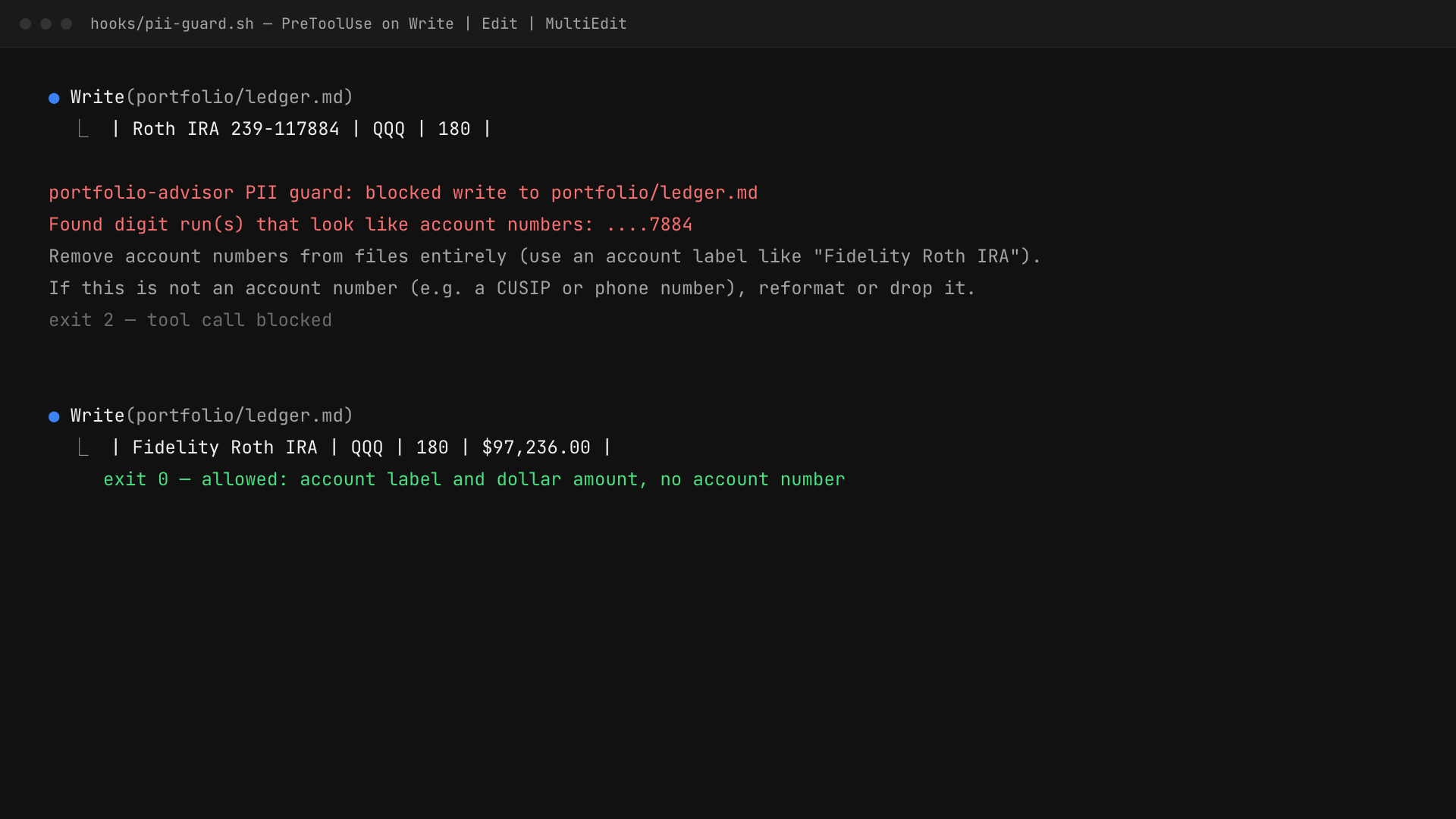
A collection of agents for Claude (Desktop and Claude Code) and the ChatGPT/Codex desktop app. Each one ships two ways: as a plugin (the skill plus slash commands and hooks, installed through a plugin marketplace) or as a standalone skill folder. The first is portfolio-advisor, a blunt, US-focused portfolio analysis tool. It reads the brokerage, 401(k) and IRA statements you give it and covers four jobs: allocation drift, tax moves (tax-loss harvesting, asset location, Roth conversions), concentration risk, and retirement trajectory. It keeps its memory in plain markdown files in your own folder and grades its previous recommendations at every review. A hook blocks account numbers from being written to any file. It's an analysis tool, not a registered investment adviser. Open source (Apache-2.0): github.com/dretech-ai/dretech-agents. Install guide →
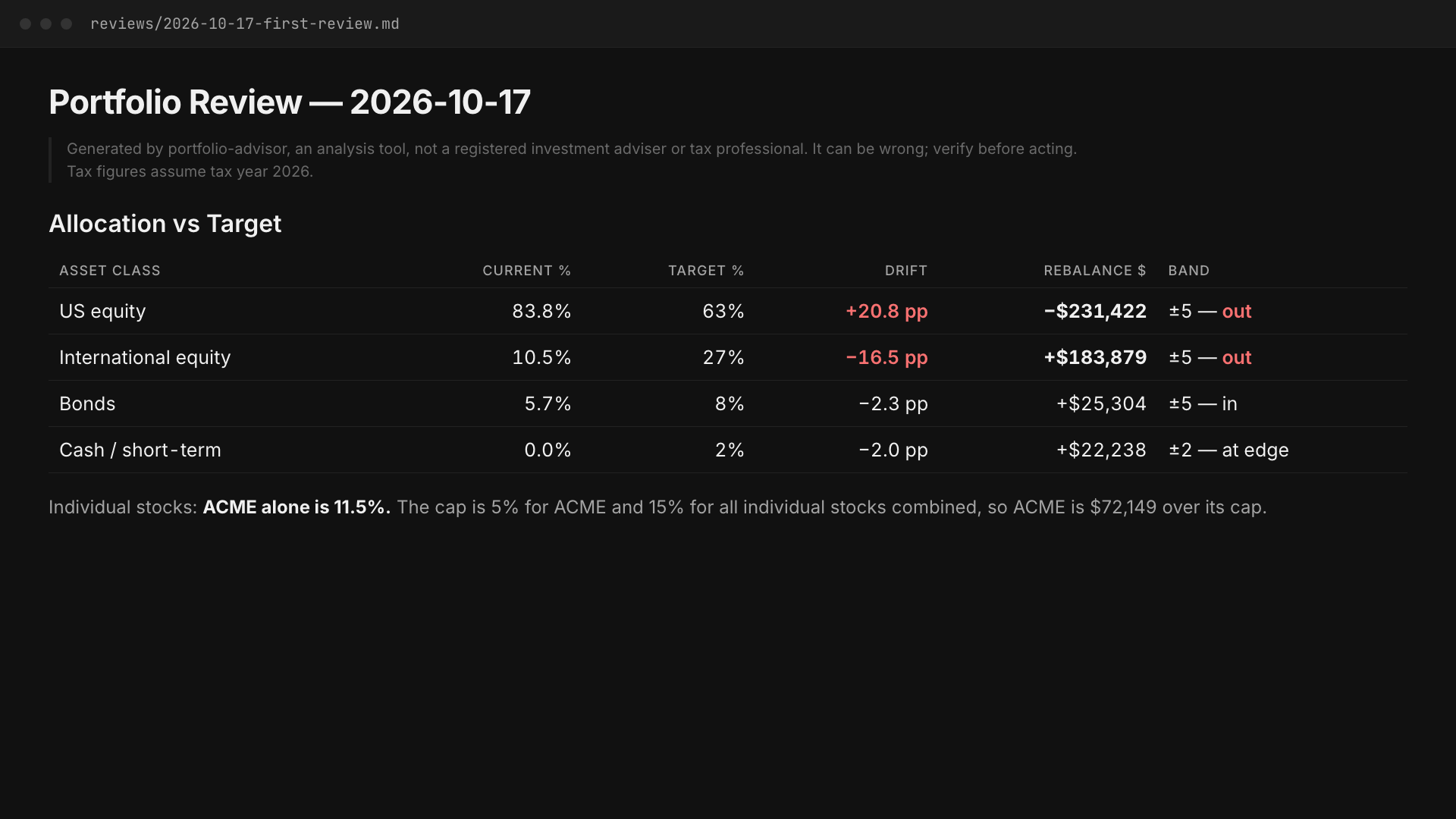
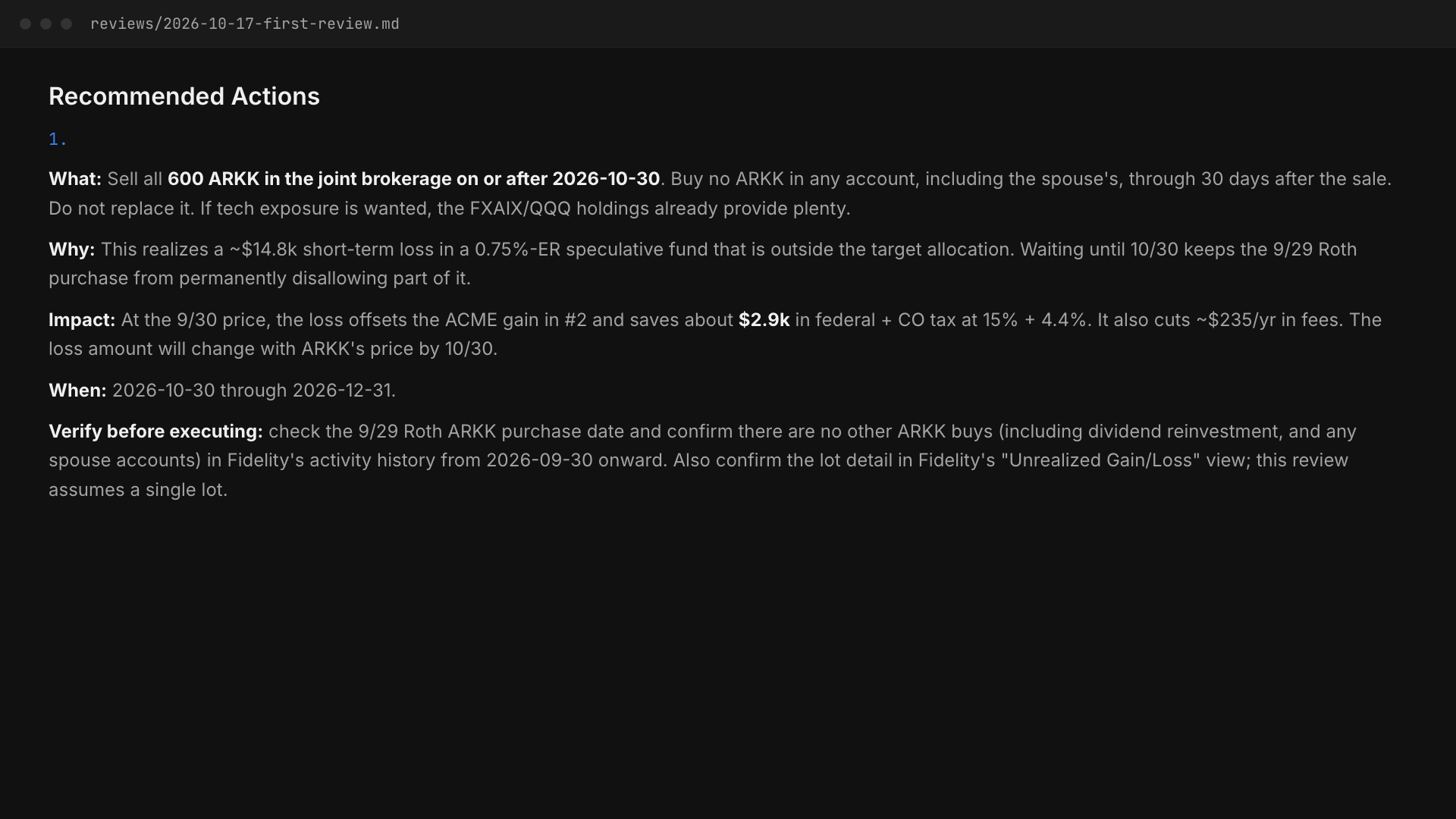
Review — allocation drift against the confirmed target, and the employer-stock cap breach.Action #1 — a tax-loss harvest timed to dodge a wash sale from a Roth purchase.PII guard — a write with an account number is blocked; the labelled version goes through.
Screenshots show real output from one /review run on a fictional portfolio and statement. No real data.
The flagship project — and the loop it was built for is now closed. A native macOS app turns the Agent OS into live, trained harnesses: a pluggable adapter framework compiles the canonical Markdown into whatever each tool actually reads — OpenClaw workspaces, Hermes instruction files, a repo-scoped Codex AGENTS.md, or paste blocks for Claude Cowork — with data-designation (PII / Enterprise / Public) carried through every artifact. Authoring is agent-driven (streaming interviews, a bootstrap wizard, refine-by-interview), guarded by a validation engine, diff-and-version management, local git snapshots, and an encrypted PII vault for exactly the files the PII posture keeps out of git. And the loop runs both ways: a context backfeed harvests what agents learn at runtime back into the canonical spec as human-reviewed proposals, and an evals layer measures the compiled spec against itself — cases generated from skills' test plans, identity rules, and memory recall; deterministic assertions before an LLM judge; regression history pinned to spec versions; and every failure feeding a refine interview. Spec → compile → measure → refine, end to end. Newest: an enterprise library — Enterprise-designated content flows from one person's OS to the whole team through an AI vet, a human admin gate with an audit trail, and validation-gated pulls — across any number of curated repos — plus a one-click demo mode that swaps the app onto a fictional, fully-populated personal OS with every delivery path blocked. Now open source (Apache-2.0): github.com/dretech-ai/personal-os-studio.
Demo mode — the six canonical layers, an identity file open with its PII banner.Compile — canonical layers become OpenClaw's generated files; push disabled in demo mode.Evals — a two-case suite run against the compiled spec, both passing (2/2).
Screenshots show demo mode — a fictional personal OS (Orbit Labs' creative director and her agent Beacon). No real data.
The server-side evolution of the ecosystem: a full-stack web application (React, FastAPI, SQLite) built around a new persona — the AI Admin, a human administrator amplified by an LLM at every step. Teammates file skill requests through a public form; the AI triages, detects duplicates, and drafts canonical skill documents; the admin decides. AI-vetted contributions flow in from Personal OS Studio clients into a curated catalog (allow/disallow with a permanent audit trail), and approved content pushes back out to the fleet over a hub-and-spoke network where Macs only ever connect outbound — enrollment tokens, heartbeats, and a command queue with delivery receipts; the client machine always gets final local say. Design-first: the build is specified as an ordered series of eleven implementation prompts, led by a comprehensive UX brief maintained as a living document.